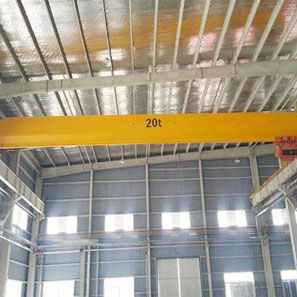
When reviewing tower crane specifications, many people immediately look for the “maximum lifting capacity.” For example, seeing a 25-ton rating might make you think it’s more than enough. However, the true indicator of whether a crane can handle your specific job often lies in another metric hidden in the spec sheet: the tip load.
To put it simply: the maximum lifting capacity is the limit of what the hook can lift at its closest point to the mast, whereas the tip load is what it can still lift at its furthest reach. For most practical lifting operations, the latter is the actual bottleneck.
Take two ACE brand tower cranes with 70-meter jibs as an example: the TC 7059 has a maximum lifting capacity of 20 tons and a tip load of 5.2 tons; the TC 7074 has a maximum lifting capacity of 25 tons, but its tip load is only 2.5 tons. While the TC 7074 has a 5-ton advantage in maximum capacity and appears stronger on paper, if the lifting operation occurs near the jib tip, it can only handle 2.5 tons—less than half of what the TC 7059 can manage. Relying solely on maximum lifting capacity for selection can easily lead to the wrong choice here.
Industry data supports this. The tip loads for ACE series tower cranes generally range from only 10% to 26% of their maximum lifting capacities. Similarly, the 20-ton version of the Comansa 21CM450 has a tip load of 3 tons at an 80-meter radius. This demonstrates that the maximum lifting capacity has very limited reference value for actual far-end operations.
Why is the gap so large?
A tower crane’s capability is governed by lifting moment, not just lifting capacity. Moment equals lifting capacity multiplied by radius. Because the crane’s structural strength and anti-overturning stability are finite, the greater the radius, the less weight it can safely lift. The maximum lifting capacity occurs when the trolley is close to the mast (small radius), while the tip load occurs when the trolley is at the very end of the jib (maximum radius). From the jib root to the tip, the rated lifting capacity of a single crane follows a continuously descending curve, rather than being a fixed value.
Jib length itself also affects the load. Take the Potain Evy 30-23: with a 30-meter jib, it can lift 1.32 tons at a 24-meter radius; with a 24-meter jib, it can lift 1.45 tons at the exact same position. The extra jib sections don’t help you lift more; instead, they reduce the lifting capacity at every position.
So, which number should you look at when selecting a crane?
First, confirm your maximum lifting radius, and then check the rated lifting capacity at that specific radius. If your heaviest component needs to be placed 50 meters away from the mast, you need to check the crane’s lifting capacity at a 50-meter radius, not its “25-ton maximum.” That 25-ton rating only applies within a short range of just over ten meters.
In practice, the lifting performance curve chart provided by the supplier is the only reliable basis for selection. This chart lists the rated lifting capacities at different radii. When selecting a crane, find your furthest lifting point distance and the weight of the heaviest component, cross-reference them, and confirm that the rated capacity at that radius covers your needs. If a supplier only emphasizes the maximum lifting capacity and is vague about the tip load or performance curve, you should ask for clarification. The maximum lifting capacity determines the crane’s ability to handle heavy components near the mast, but it only represents one endpoint of the crane’s capability, not the whole picture.
Selecting a tower crane is essentially about finding a balance between radius and weight. The maximum lifting capacity tells you what you can lift at the closest point, while the tip load tells you what you can still lift at the furthest point. Construction sites don’t stack all components right at the base of the crane; most of the time, the hook operates in the middle or at the far end of the jib.
Feel free to provide your maximum lifting radius, the weight of the heaviest component, and the lifting frequency. Based on the actual moment requirements of your working conditions, we will provide recommendations for jib configuration and the corresponding load capacities at specific radii, rather than just quoting a maximum lifting capacity. Choosing the right tower crane starts with understanding “how much it can still lift at the furthest point.”
If possible, kindly suggest please your working industry/process, working pressure, working medium, etc. Given detailed request helps to gain better-matched customized solution. Thanks for your patience.
your request will be responsed within 3 hours, kindly pay attention to your email please.