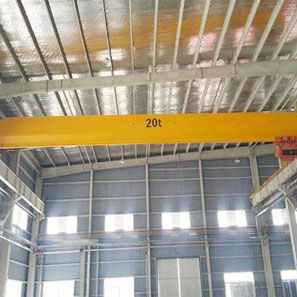
In steel mills, coastal ports, seafood processing plants, and similar settings, cranes face sustained temperatures above 45°C and saturated humidity. Standard models often develop electrical short circuits, structural corrosion, and brake failures within two to three years. A crane truly suited to high-temperature, high-humidity conditions requires targeted configurations across three areas: electrical systems, structures, and drive and safety systems.
I. Electrical Systems: Moisture Protection Takes Priority Over Heat Dissipation
When moisture-saturated air enters an electrical cabinet and condenses, it is the primary cause of insulation degradation and short circuits.
1. Dual “air conditioning + independent dehumidification” system for the electrical room. Cooling alone with air conditioning raises relative humidity; a separate industrial dehumidifier is needed to keep cabinet humidity within a safe threshold.
2. Cabinet sealing and anti-condensation heaters. Electrical cabinets should be rated IP54 or higher, with waterproof gaskets on doors and waterproof connectors on terminals. A humidity-controlled heater inside the cabinet automatically activates when humidity exceeds the set point to prevent condensation. Motor cable outlets should be sealed with waterproof cable glands, with joints wrapped in waterproof tape and covered with heat-shrink tubing.
3. Weather-resistant cables and insulation monitoring. Use weather-resistant cables such as chloroprene rubber, rated for -40°C to 100°C and resistant to hydrolysis. Insulation resistance monitoring should be standard to provide real-time warnings of insulation degradation.
II. Metal Structures: Equal Emphasis on Drainage and Coating
4. Three-layer heavy-duty anti-corrosion coating. Surfaces should be blast-cleaned to Sa2.5, then coated with “epoxy zinc-rich primer + epoxy mica intermediate coat + fluorocarbon topcoat,” with a total dry film thickness of no less than 200 microns. Bolts and pins should be hot-dip galvanized or Dacromet-treated to avoid galvanic corrosion.
5. Structural drainage design. Closed structures such as main girders and legs should have drain holes at their ends; weld seams should be rounded to prevent water accumulation; water retaining edges should be added along both sides of the track.
6. Corrosion-resistant materials for key components. For high-humidity applications, use face-contact wire ropes or stainless steel wire ropes; for highly corrosive environments, use 316L stainless steel lifting attachments; gearbox oil seals should use high-temperature-resistant materials, and hydraulic lines should have a protective outer layer.
III. Drive and Safety: Ensuring Reliable Braking at High Temperatures
7. High-temperature-adaptive braking system. Brakes should use high-temperature-resistant friction materials, with brake wheels treated against rust; for frequent braking applications, automatic lining wear monitoring should be installed. Buffers and end stops should use weather-resistant materials to prevent aging failure.
8. Enhanced motor heat dissipation. Use F-class or H-class insulation with adequate power margin, and add rain covers to motor housings; VFD cabinets should be designed for heat dissipation at the upper ambient temperature limit, with independent air conditioning if necessary.
9. Intelligent monitoring and remote O&M. Attach corrosion sensors to key structural components, install temperature/humidity and smoke alarms inside electrical cabinets, and upload data to a platform for automatic alarms—enabling proactive intervention and reducing inspection workload.
Reliability in high-temperature, high-humidity environments comes from addressing environmental parameters head-on during the design phase: one more dehumidifier, one more drain hole, one more topcoat, one more layer of early warning—in exchange for lower downtime frequency and longer service life. We welcome your operating parameters—temperature and humidity ranges, corrosive media types, duty class, and continuous operating hours—and will provide targeted configuration recommendations accordingly.
If possible, kindly suggest please your working industry/process, working pressure, working medium, etc. Given detailed request helps to gain better-matched customized solution. Thanks for your patience.
your request will be responsed within 3 hours, kindly pay attention to your email please.