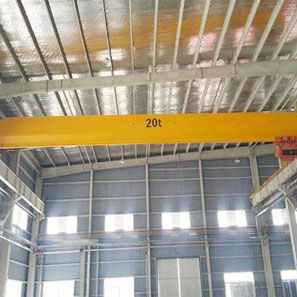
In industrial manufacturing, KBK modular cranes are the core equipment for material flow within workshops. Facing the two mainstream track systems—”rigid” and “flexible”—scientific selection is directly related to production line efficiency and product yield rates.
1. Core Differences Between Rigid and Flexible Tracks
The fundamental differences between rigid and flexible KBK systems lie in their connection methods, operational precision, and structural stability.
Structure and Connection
Flexible KBK: Uses segmented spliced tracks connected to the building structure via spherical hinge joints. It features a lightweight structure and low building load-bearing requirements, but allows for slight swinging under load.
Rigid KBK: Utilizes integrated closed-section steel rails connected via high-strength bolts to form a closed-loop rigid frame. It has extremely strong structural integrity, shows no obvious deformation under load, requires no additional load-bearing beams, and occupies less headroom.
Precision and Stability
Flexible KBK: Exhibits slight swinging during operation, with a dual-girder synchronization deviation of approximately 8~15mm and a typical repeat positioning accuracy of ±5~10mm.
Rigid KBK: Rigid connections completely eliminate swinging. Track deflection is controlled within 1/1000 of the span, dual-girder synchronization deviation is ≤3mm, and repeat positioning accuracy can reach ±0.1~±3mm.
Scenarios and Flexibility
Flexible KBK: Highly flexible layout, supporting later adjustments and multi-curve designs. Suitable for low-frequency handling, general material turnover, and workshops with frequently changing layouts.
Rigid KBK: Relatively fixed layout but with excellent stability. Ideal for standardized workshops, fixed assembly lines, and high-frequency, high-precision continuous operations.
2. Selection Guide for Precision Assembly Scenarios
For precision assembly scenarios such as new energy battery module assembly, automotive parts mating, and engine assembly, the rigid KBK crane is the preferred solution.
Core Advantages:
Millimeter-Level Precise Alignment: The rigid structure achieves positioning accuracy of ±1mm or even higher, avoiding the alignment difficulties and workpiece collisions caused by flexible track swinging, significantly improving assembly efficiency.
High Stability for High-Frequency Operations: It maintains extremely high stability during long-span, high-frequency operations, without loosening connections or precision degradation over long-term use.
Low Total Cost of Ownership: Although the initial procurement cost is slightly higher, the single alignment time can be reduced by more than half. The annual maintenance cost is only 3%-5% of the total equipment price, yielding significant long-term economic benefits.
3. Crane Selection Decision
Choose Flexible KBK: For older workshops (with load-bearing limitations), layouts requiring frequent adjustments, general material handling, and positioning accuracy requirements of ±5mm or above.
Choose Rigid KBK: For newly built standardized workshops, fixed assembly lines, precision assembly/mold changes, and applications pursuing ultimate smoothness and high positioning accuracy.
In the field of precision manufacturing, equipment stability directly determines product quality. If you are looking for the optimal material flow solution for your workshop, please feel free to contact us. We provide full-process services ranging from condition surveys and layout planning to equipment customization, helping you build an efficient and precise modern production line.
If possible, kindly suggest please your working industry/process, working pressure, working medium, etc. Given detailed request helps to gain better-matched customized solution. Thanks for your patience.
your request will be responsed within 3 hours, kindly pay attention to your email please.