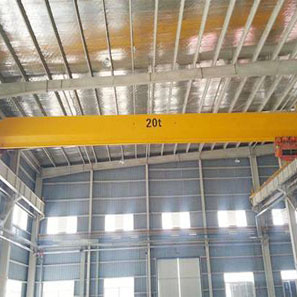
China has a well-established crane manufacturing industry and a complete supply chain, offering solutions ranging from standard lifting equipment to large-scale customized industrial crane systems.
For international buyers, sourcing cranes from China is not simply about the initial purchase price. It requires careful consideration of equipment selection, technical specifications, manufacturing quality, transportation, installation, and after-sales support throughout the entire procurement process.
1. Why Source Cranes from China?
China’s crane manufacturing industry has a comprehensive supply chain, a wide range of products, and strong customization and engineering capabilities.
Whether you need single-girder or double-girder overhead cranes, European-style lightweight cranes, gantry cranes, jib cranes, electric hoists, explosion-proof cranes, metallurgical cranes, or customized lifting equipment, Chinese manufacturers can develop suitable lifting solutions based on your building conditions, lifting capacity, operating frequency, and working environment.
2. Core Parameters to Confirm Before Procurement
Complete technical specifications are the prerequisite for obtaining an accurate quotation. When making an inquiry, please clarify at least the following:
3. How to Accurately Match the Right Crane Type?
Selection should not be based solely on lifting capacity; it requires a comprehensive evaluation of your actual application scenarios:
4. Key Factors Driving Crane Price Differences
There is no universal price for cranes. Even for two 10-ton cranes, prices can vary significantly due to: span and lifting height, duty class, core component brands (motors, gearboxes, electrical components), steel and structural design, safety configurations, packaging, shipping, and after-sales service. Therefore, when comparing prices, always ensure you are comparing “the same parameters, same duty class, same configuration, and same service scope.” Never blindly chase the lowest quote.
5. Five Dimensions for Selecting a Quality Supplier
6. Standardized Procurement Process
The complete process is: Requirement Confirmation → Technical Proposal → Quotation → Contract → Production → Factory Inspection → Packaging → Ocean Freight → Installation & Commissioning → After-Sales Service. Before formal production, it is crucial to confirm the final technical parameters, component brands, certification requirements, and delivery scope. For large projects, providing factory CAD drawings in advance is highly recommended for detailed design.
7. Logistics and Shipping Solutions
Large cranes are typically shipped in modules. Depending on the equipment’s dimensions and weight, options include standard containers, open-top containers, flat racks, or breakbulk vessels. Suppliers should provide packaging dimensions, individual weights, total volume, and loading plans in advance to accurately calculate international logistics costs.
8. Installation and Commissioning Support
Depending on project complexity, you can choose from three options:
9. Essential Delivery Documents to Confirm
We recommend specifying the required technical and quality documents in the contract, including: Technical Specifications, General Assembly Drawings, Electrical Schematics, Installation & Operation Manuals, Factory Test Reports, Quality Inspection Certificates, Packing List, Certificate of Origin, and destination country certification documents (e.g., CE, which must be confirmed during the design and quotation phases).
10. Core Risk-Avoidance Guide
11. Evaluate Total Lifecycle Value
A crane’s true value is reflected not only in its purchase price but also in its safety, stability, service life, maintenance costs, failure rate, and after-sales response speed throughout its entire lifecycle. When choosing a supplier, comprehensively compare technical proposals, manufacturing capabilities, delivery capabilities, and after-sales service, rather than relying on a single price metric.
Ready to Source a Crane from China?
Whether you need a single overhead crane for your workshop or a complete industrial lifting system, send us your project requirements.
Based on your lifting capacity, span, lifting height, working environment, and application requirements, our team can recommend a suitable crane solution and provide a professional quotation.
Contact us today to get your customized crane solution and quotation.
If possible, kindly suggest please your working industry/process, working pressure, working medium, etc. Given detailed request helps to gain better-matched customized solution. Thanks for your patience.
your request will be responsed within 3 hours, kindly pay attention to your email please.