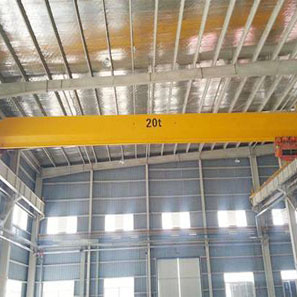
In modern building construction, municipal infrastructure, and prefabricated component manufacturing, single girder gantry cranes have become the standard solution for material transport and component lifting. Thanks to their compact structure, cost-effectiveness, and flexible adaptability, these cranes balance stable lifting capacity with a lightweight design, deeply empowering the standardization and efficiency of construction projects.
1. Why Construction Sites Need Single Girder Gantry Cranes
Featuring a proven “single main girder + electric hoist” structure, single girder gantry cranes perfectly match the unique demands of construction sites, such as temporary setups, frequent relocations, and space constraints:
Rapid Deployment to Shorten Schedules: The modular design requires minimal foundation work. They can be assembled and put into operation immediately upon arrival, significantly reducing on-site waiting time.
Cost-Effective Efficiency: Procurement, installation, and maintenance costs are notably lower than those of double girder cranes. They offer outstanding cost performance for small-to-medium tonnage and low-to-medium frequency operations.
Flexible Adaptability: Available in both rail-mounted and rubber-tired (tire-driven) configurations, with customizable spans and lifting heights, they comprehensively cover the lifting needs of various standard materials.
Safe and Durable: Equipped with multiple safety devices—including overload protection, travel limiters, and emergency stops—and built with high-strength steel, they ensure stable operation in complex, wind-resistant, and seismic environments.
User-Friendly Operation: Supporting wired pendants, wireless remote controls, and cabin operation, they provide operators with clear visibility and precise control, effectively reducing labor intensity.
2. Application Scenarios: Supporting the Entire Construction Process
As the “workhorse” of site logistics and lifting, single girder gantry cranes are widely utilized across core construction scenarios:
Building Construction: Handling the vertical and horizontal transport of rebar, formwork, masonry blocks, and equipment to improve floor-level and site turnover efficiency.
Municipal & Road/Bridge Engineering: Lifting and positioning prefabricated cover plates, small box girders, and pipeline equipment, perfectly suited for linear projects requiring fast relocation.
Prefabricated Component Production & Yards: Managing demolding, transport, and stacking processes in PC component plants and beam yards, ensuring standardized production and consistent quality.
Water Conservancy, Power, & Station Projects: Meeting the demands of outdoor, long-term projects like pump stations and substations for equipment installation, maintenance, and material lifting.
On-Site Temporary Logistics Centers: Serving as the core lifting equipment in material yards to centralize the loading/unloading and on-demand delivery of steel and structural components.
3. Selection Guidelines and Operational Standards
To maximize equipment value, buyers should focus on the following core parameters during selection:
Rated Lifting Capacity: Selected based on the maximum load plus a safety margin; 5t–20t is the mainstream range for general construction.
Span & Cantilevers: Matched to the width of the working area. Cantilevers can extend lateral reach and optimize space utilization.
Lifting Height: Must include a safety clearance based on floor heights and component dimensions to ensure adequate overhead space.
Duty Class: A4 is suitable for general site work, while A5–A6 is recommended for high-frequency prefabrication yards to ensure durability.
Environmental Adaptation: Outdoor models require enhanced anti-corrosion, wind-resistant, and waterproof designs.
Additionally, standardized installation, regular maintenance, and certified operation are crucial for long-term stability and site safety management.
4. Empowering the Construction Industry: An Efficient Lifting Choice
As the construction industry advances toward industrialization, single girder gantry cranes continue to evolve with technologies like variable frequency drives (VFD) and intelligent monitoring. More than just lifting equipment, they are vital tools for construction enterprises to compress schedules, control costs, and ensure safety.
From urban skyscrapers to transportation networks, we remain committed to providing customized solutions and comprehensive services tailored to on-site needs, helping the construction and engineering industry complete its missions more safely, efficiently, and economically.
If possible, kindly suggest please your working industry/process, working pressure, working medium, etc. Given detailed request helps to gain better-matched customized solution. Thanks for your patience.
your request will be responsed within 3 hours, kindly pay attention to your email please.