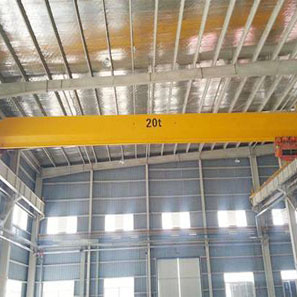
2026 Overhead Crane Procurement Guide
With the deepening of Industry 4.0 and the implementation of “Dual Carbon” goals, 2026 has become a pivotal year for the iteration of Overhead Cranes. The global market is accelerating its transition from traditional “high-energy-consuming, heavy-duty” equipment towards European-style lightweight, intelligent, and green solutions. Data indicates that the penetration rate of European-style cranes in new construction and retrofit projects is expected to exceed 45% by 2026.
Choosing a next-generation crane is not merely about updating equipment; it is about introducing a high-efficiency, safe, and interconnected smart material handling system to your factory.
I. Why Upgrade Now? Three Core Drivers
- Stringent Energy Efficiency Compliance: Global industrial motor energy efficiency standards (e.g., IE5) are becoming increasingly rigorous. Traditional high-energy-consuming equipment faces the risk of obsolescence and significant penalties from high electricity costs.
- Smart Manufacturing Imperatives: Automated production lines require cranes capable of integrating with MES/ERP systems to achieve transparency in logistics data and synchronization with production cycles.
- Maximizing Space Value: With soaring land costs, modern factories urgently need cranes with minimal dimensional limits to unlock valuable vertical headroom.
II. Four Core Technical Trends for 2026
1. European-Style Lightweight Design
- 20%-30% Weight Reduction: Utilizing compact box-girder structures significantly reduces wheel load, saving approximately 10%-15% on factory civil engineering investments.
- Enhanced Headroom Utilization: Extremely minimal Hook Approach distances allow for increased effective lifting height within the same building envelope, maximizing space utilization.
- Operational Energy Savings: A lighter bridge combined with high-efficiency motors drastically reduces long-term electricity costs.
2. Smart Control & Electronic Anti-Sway
- Millimeter-Level Positioning: Electronic anti-sway algorithms are now standard, automatically canceling payload swing to achieve positioning accuracy of ±2mm. This reduces reliance on operator skill and boosts efficiency in precision assembly.
- Predictive Maintenance (IoT): Built-in sensors monitor load, motor current, and wear data in real-time, providing early fault warnings to prevent unexpected downtime.
3. Green Energy-Efficient Drive Systems
- Full Variable Frequency Drive (VFD): Standard configuration with “three-in-one” gear motors enables soft starting/stopping, eliminates mechanical shock, and achieves comprehensive energy savings of over 30%.
- Energy Regeneration Technology: Converts potential energy into electrical energy during load lowering, feeding it back into the grid to further compress energy costs.
4. International Safety & Compliance
- Multiple Active Protections: Integrated features include overload limiters, collision avoidance systems, and Zone Protection.
- Global Standard Compatibility: Strictly compliant with FEM, DIN, ISO, and the latest GB/T standards, ensuring universal applicability and compliance worldwide.
III. Why High-Quality Cranes Are More Cost-Effective?
Many buyers are tempted by low initial prices but overlook the Total Cost of Ownership (TCO).
- Initial Procurement Cost: High-quality European-style cranes may cost 15%-20% more upfront than traditional models.
- Operating Costs (Electricity): Due to lightweight design and high-efficiency motors, annual electricity savings can reach 30%-40%, typically recovering the price difference within 2-3 years.
- Maintenance Costs: Modular design and premium components reduce failure rates by 50%, making spare part replacement easier and minimizing downtime losses.
- Civil Engineering Costs: Lightweight design reduces the amount of steel structure required for the factory building, saving approximately 10%-15% on construction investment.
In 2026, the overhead crane has become a benchmark for measuring a factory’s modernization level. Choosing a manufacturer with strong R&D capabilities, a global vision, and a comprehensive service system is the optimal strategy for reducing costs, increasing efficiency, and building a green, smart factory.
News
Posted on
周一, 07 9 月 2026 05:35:16 +0000
Posted on
周四, 03 9 月 2026 04:01:50 +0000
Posted on
周二, 25 8 月 2026 08:09:59 +0000
Posted on
周五, 21 8 月 2026 06:26:28 +0000
Posted on
周五, 14 8 月 2026 05:58:59 +0000
Posted on
周五, 07 8 月 2026 02:51:43 +0000
Posted on
周四, 06 8 月 2026 07:09:58 +0000
Posted on
周三, 05 8 月 2026 03:15:03 +0000